
Why teeth crack in the first place.
For all its strength, enamel is not unbreakable. A tooth is a small structure asked to survive decades of chewing forces, temperature swings and, in many mouths, habits its owner is not even aware of. Several things tip the balance.
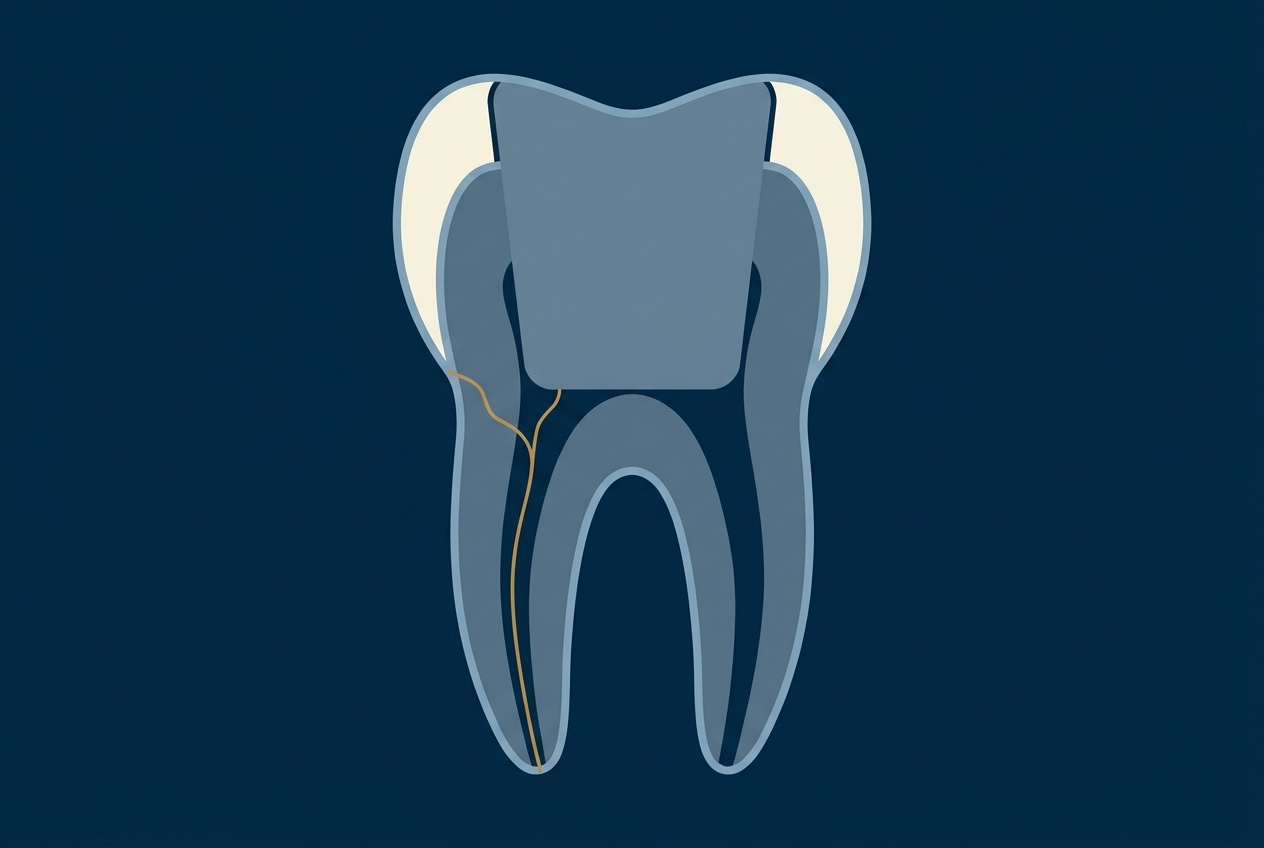
Large fillings leave less tooth to lean on. A heavily filled tooth is a patched tooth, like the molars pictured above. The filling replaces the missing bulk, but the remaining walls of natural tooth around it are thinner and structurally weaker, and it is these walls that crack under load.
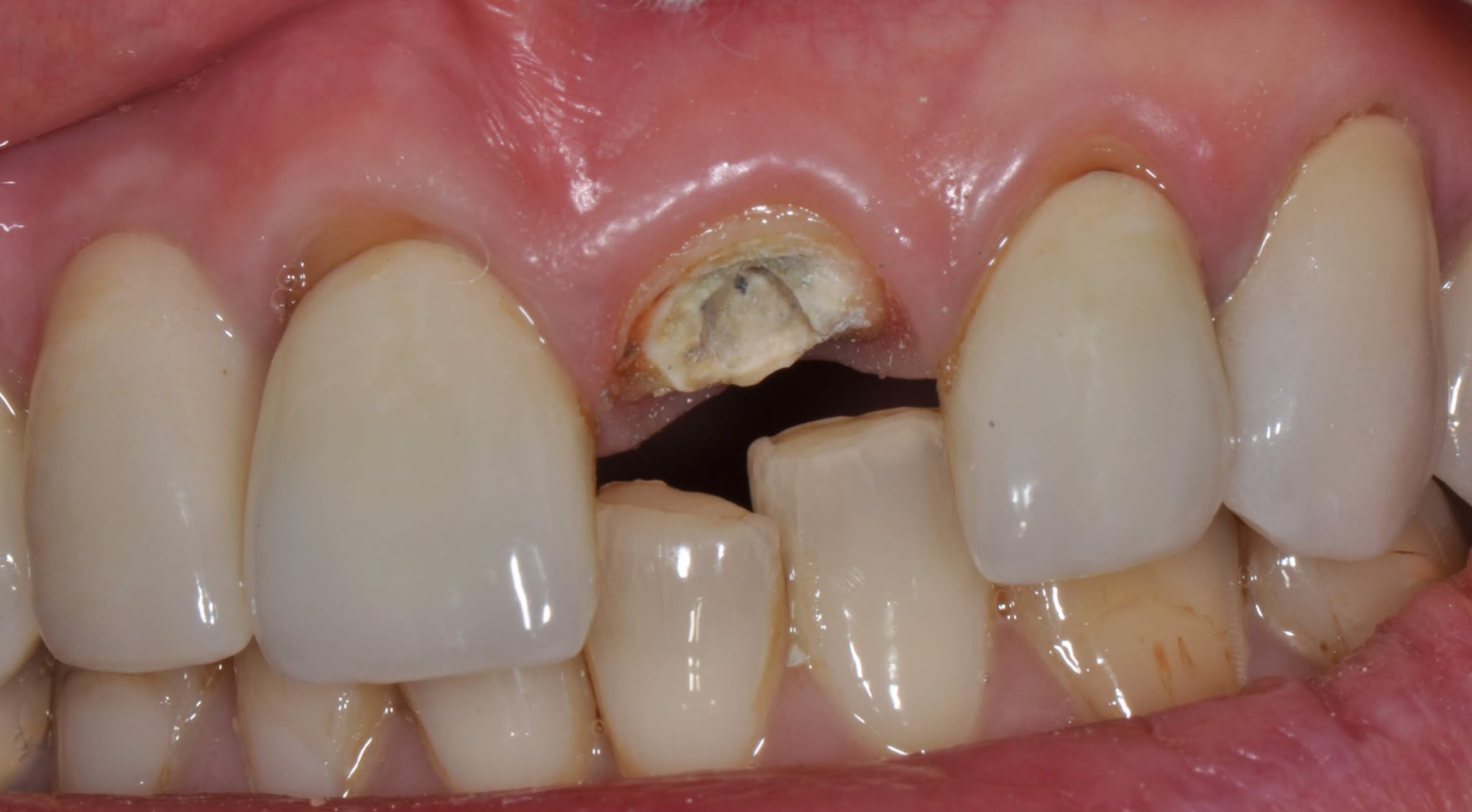
Root-treated teeth are more brittle. Root canal treatment saves teeth, but a root-treated tooth is naturally more brittle than a living one. Without protection, it can fracture, sometimes right down at the gum line.
The bite itself. The way the upper and lower teeth meet is unique to each person, and some bites place undue stress on individual teeth every time the jaws close. Add large jaw muscles and higher-than-average bite forces, and certain teeth spend years absorbing loads they were never well positioned to take.
Habits you may not know you have. Daytime clenching and night-time grinding are subconscious habits that overload teeth for hours at a stretch. Many patients only discover them after a tooth has already given way.
It is worth knowing that all teeth carry crack or craze lines. Most stay quiet for a lifetime; only some become problematic.
The teeth most often affected are the upper premolars and the lower molars, which sit where chewing forces run highest.
Part of my tooth broke away while eating. What now?
The first step is not treatment. It is a thorough examination to establish the extent and nature of the crack. Two questions have to be answered before anything is fixed.
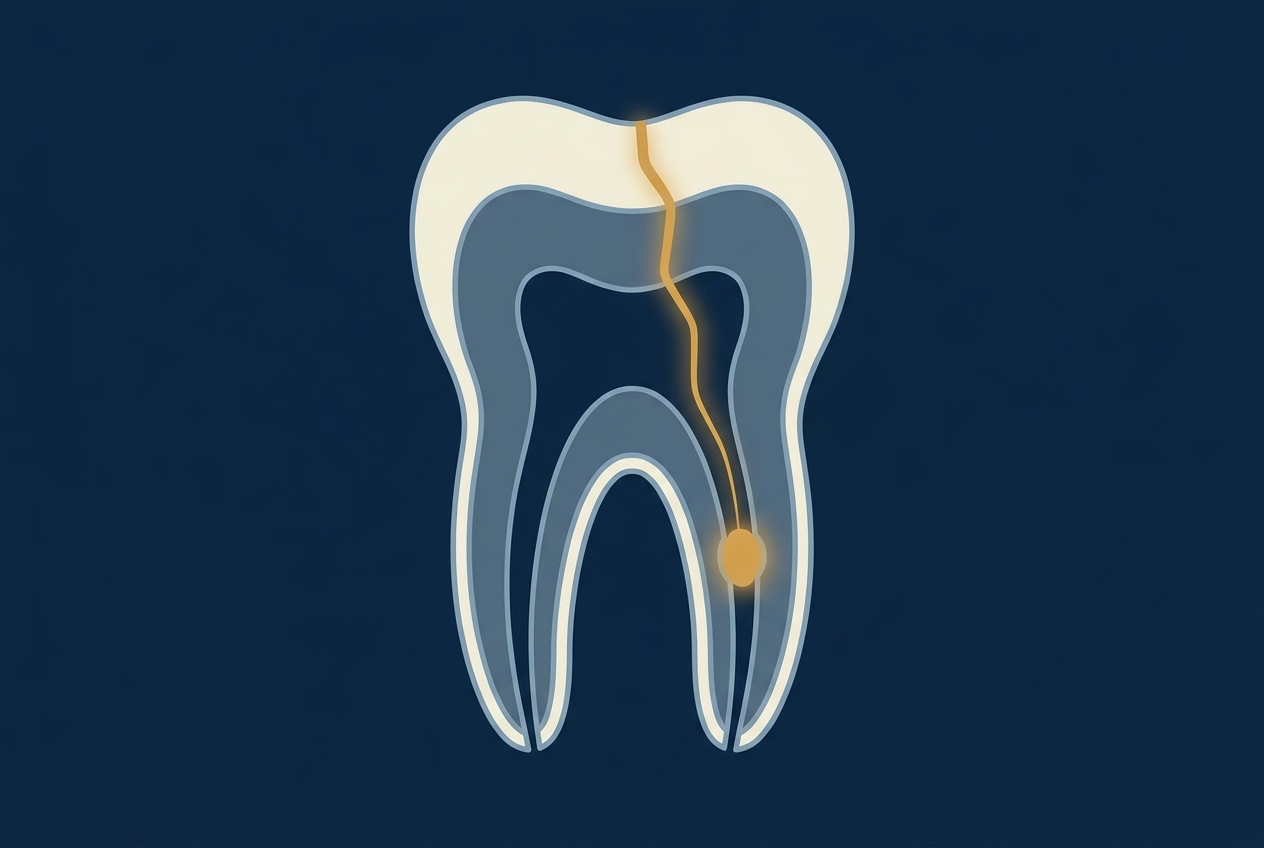
Assessment and treatment planning have to account for both, because the crown and the nerve can fail independently of each other.
From a simple filling to a crown, and sometimes more.
Depending on what the examination finds, treatment can range across three levels.
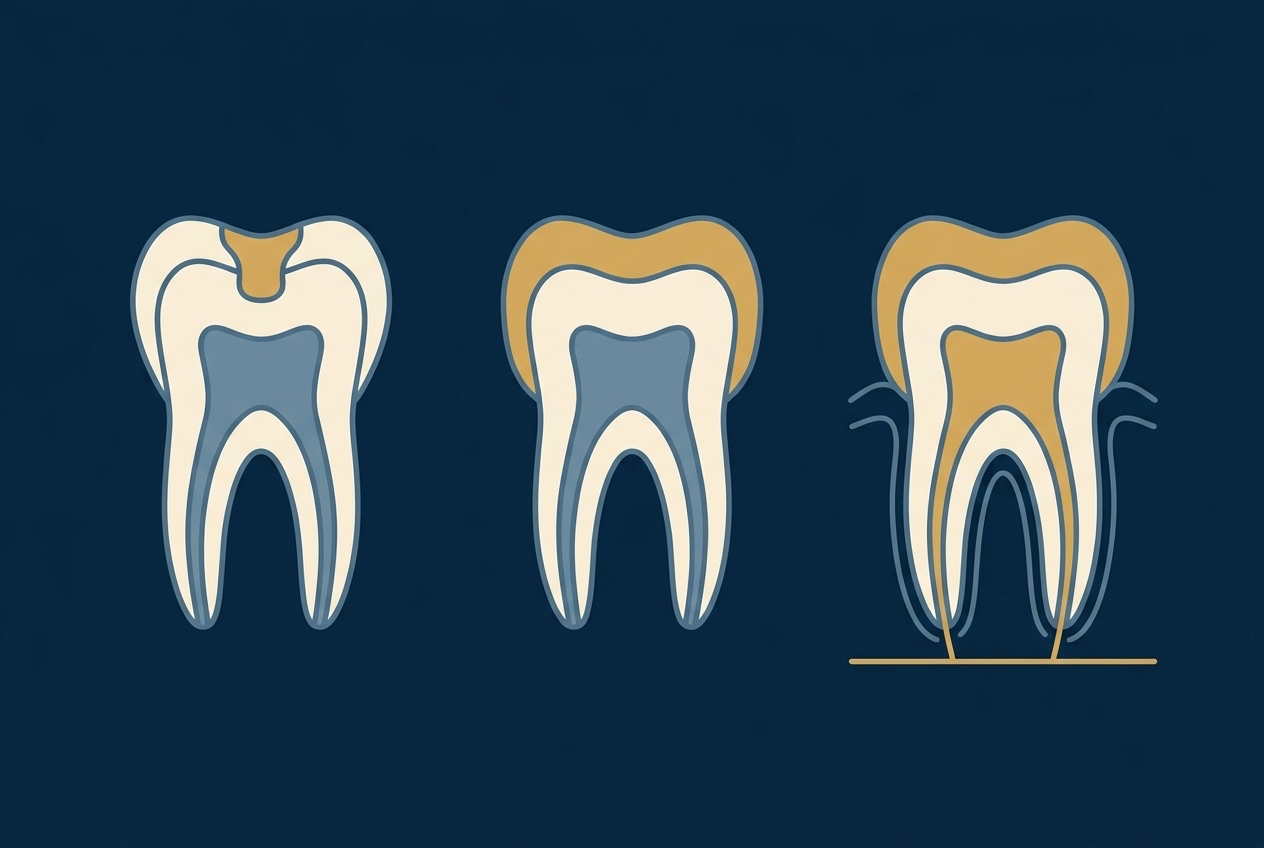
A simple restoration. Where the damage is small and contained, a filling rebuilds the missing piece and no more needs to be done.
A crown. If the nerve is healthy and the problem is purely structural, the tooth needs protection rather than nerve treatment. Think of a crown as a hard hat: a cap that lets you eat and chew on the tooth normally again.
A root canal, then a crown. If the nerve is unhealthy and there remains a possibility of pain in the future, the nerve is treated first. A root canal treats and seals the nerve space so the tooth can be kept. The crown then follows, to address the structural weakness that caused the trouble in the first place.
When neither option is viable.
Occasionally, honesty demands a harder conversation. Crack lines can extend down to the base of the tooth, where they may contribute to a localised gum problem that no filling or crown can reach.
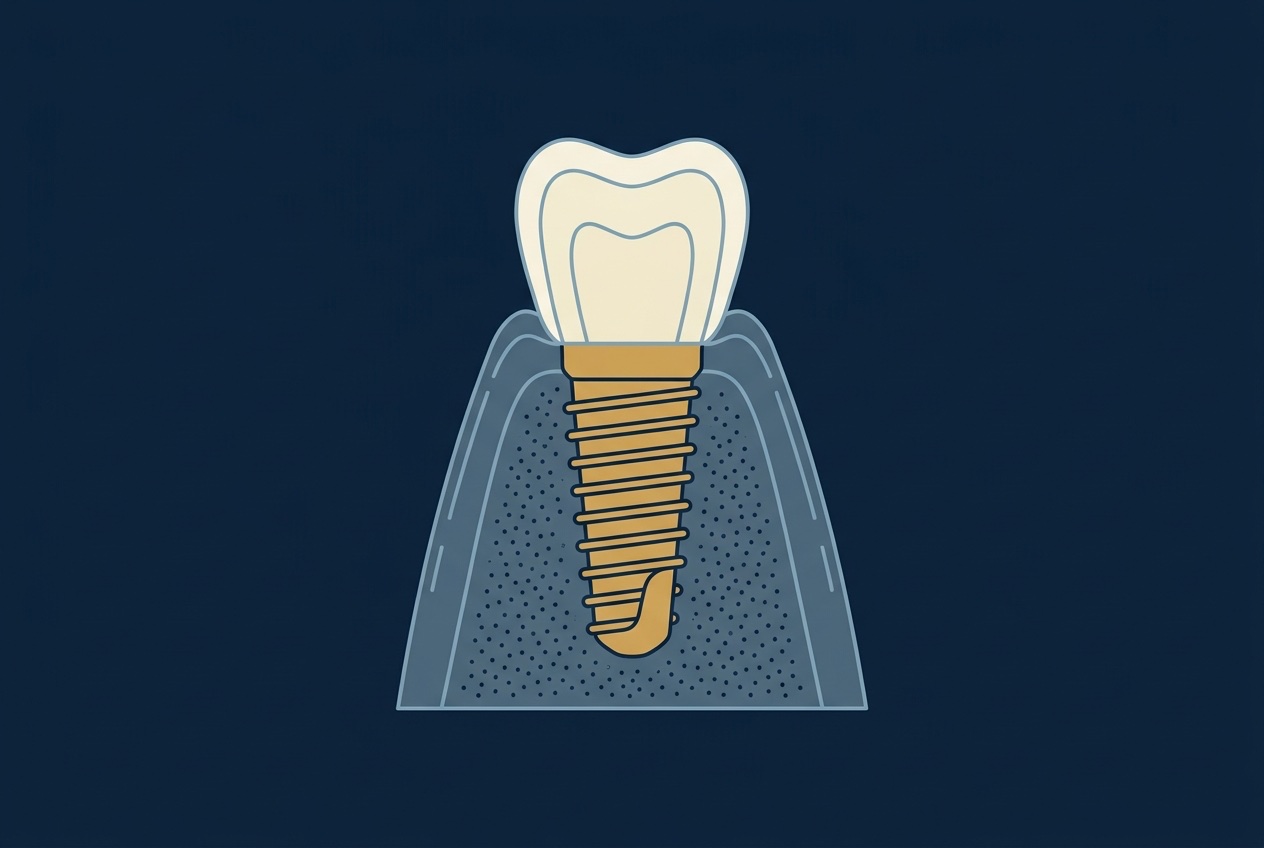
Where a root fracture is suspected, the split runs through the root itself, and patching the crown of the tooth becomes a gamble. In these cases, removing the tooth and replacing it with an implant is often the more predictable option, and the one that protects the bone and gum around it for the long term.
Cracked or broken a tooth?
The sooner a cracked tooth is examined, the more options remain on the table. Consultations are at Align Dental Surgery, Forum The Shopping Mall, Orchard.
This article is general in nature and is not a substitute for individual clinical advice. If you have cracked or broken a tooth, please arrange an examination with your dentist.